Speaking Practice
Focus:
Using AI-assisted and integrated language training approaches to develop speaking fluency, communication confidence, and meaningful language output.
- Exclusive:
This section demonstrates how speaking practice can become a natural extension of learning rather than an isolated exam task.
Emotional Tolerance & Ambiguity Handling
Focus:
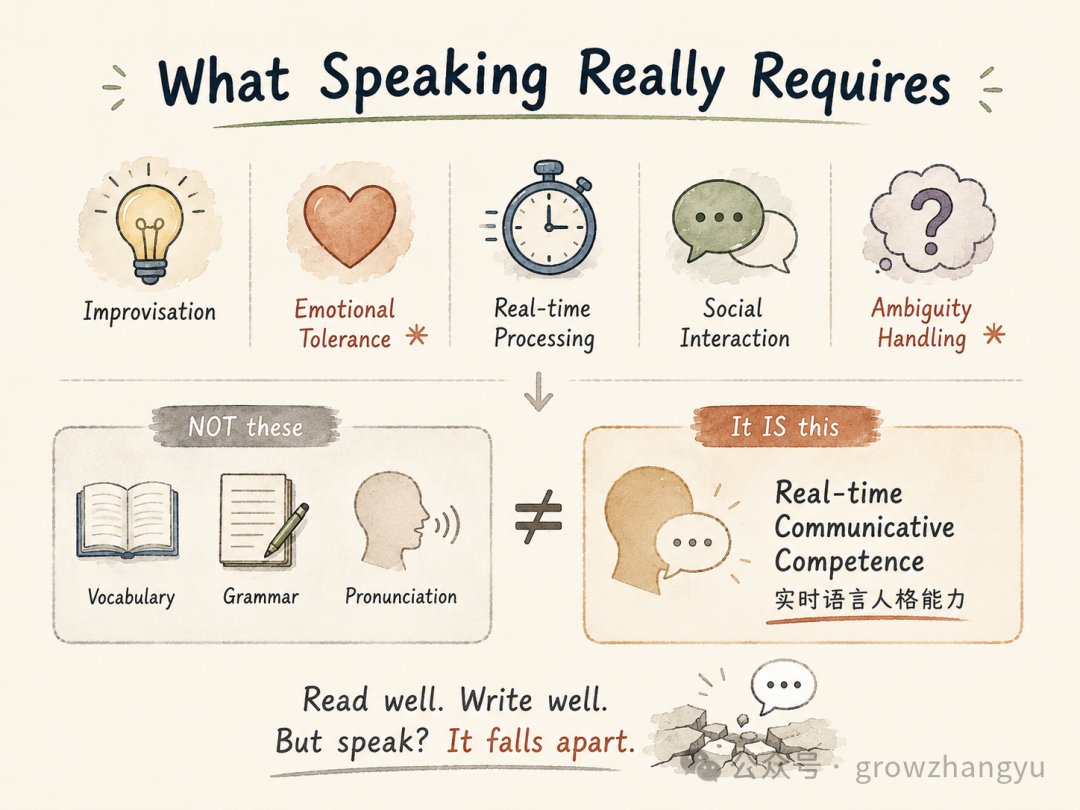
Speaking requires more than vocabulary and grammar. It involves five essential abilities:
improvisation, emotional tolerance, real-time processing, social interaction, and ambiguity handling.
This article focuses on emotional tolerance and ambiguity handling: the ability to stay engaged when communication is imperfect, information is incomplete, or progress feels uncertain.
Featured Example:
Speaking Practice: Building Skills VS. Building Habits (Why Speaking Feels So Hard)
Focus:
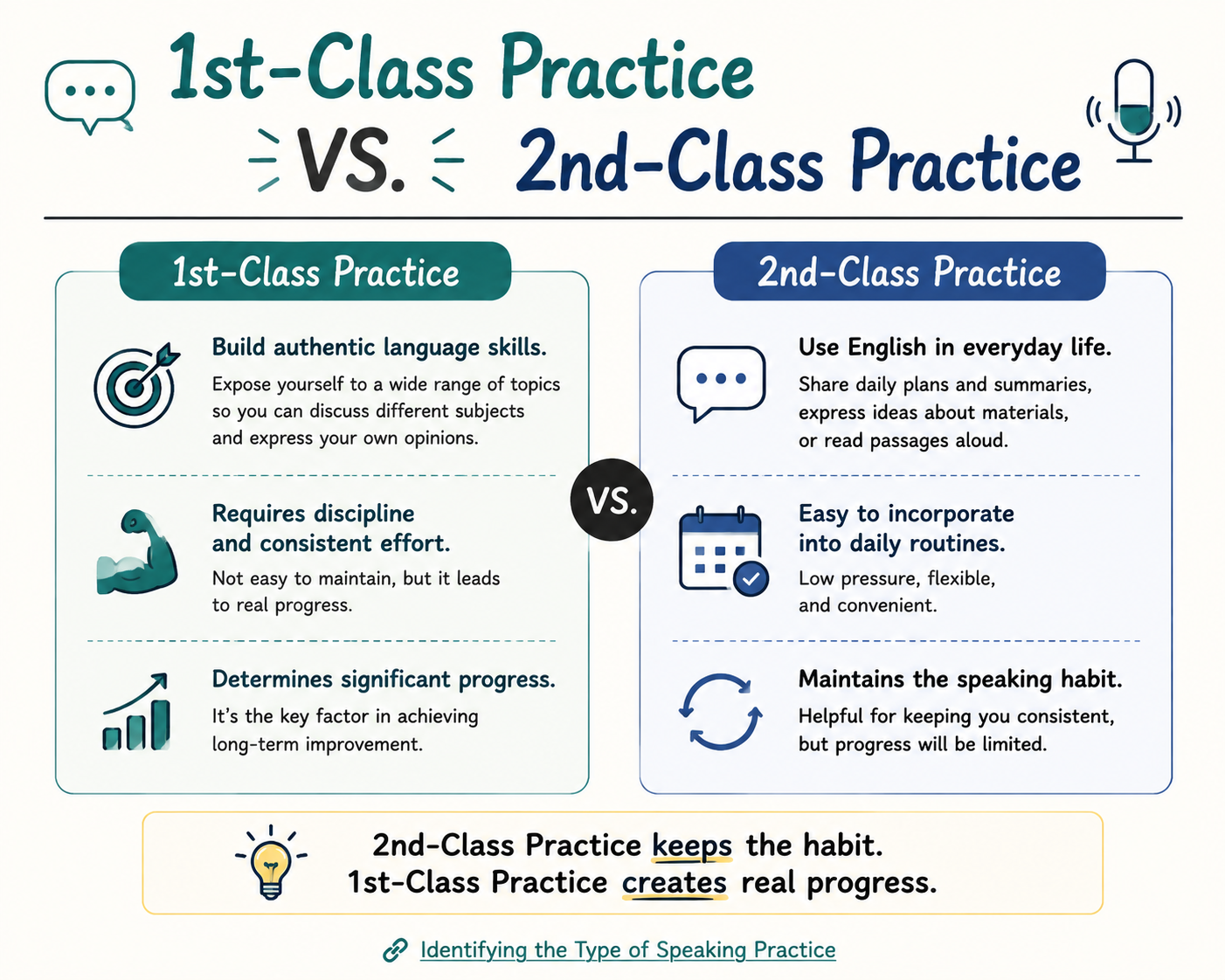
Authentic language skills come from deliberate exposure to diverse topics and expressing opinions.
1st-Class Practice drives real progress, while 2nd-Class Practice helps maintain daily speaking habits.
Featured Example:
1st-Class VS. 2nd-Class Speaking Practice(Why Speaking Feels So Hard)
Balancing Input and Output: Small Corrections, Real Progress
Focus:
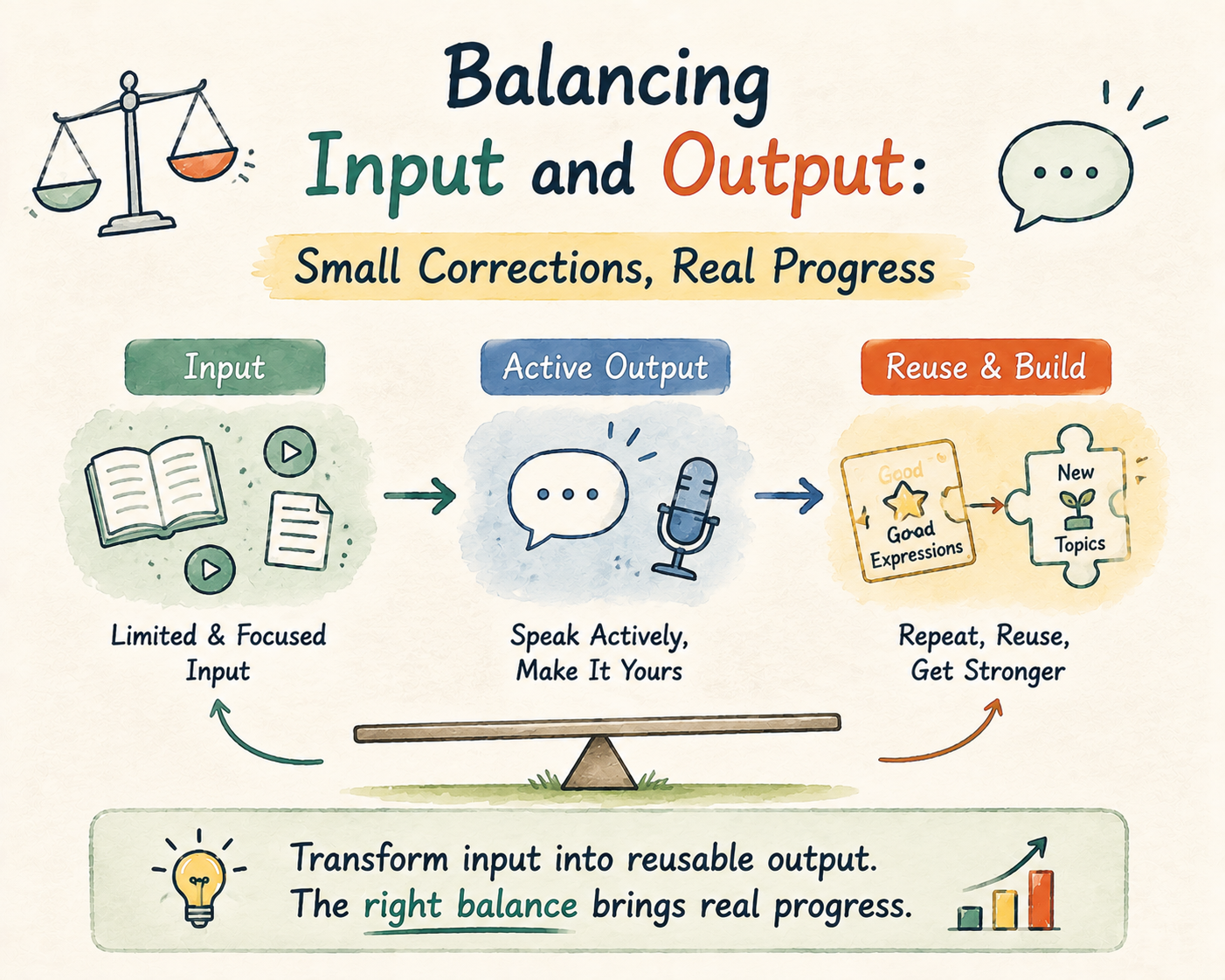
Learning to transform input into reusable output instead of endlessly collecting information.
Effective practice requires the right balance: limited input, active speaking, and repeated reuse of valuable expressions.
Featured Example:
From Input to Reusable Output: Finding the Right Practice Balance
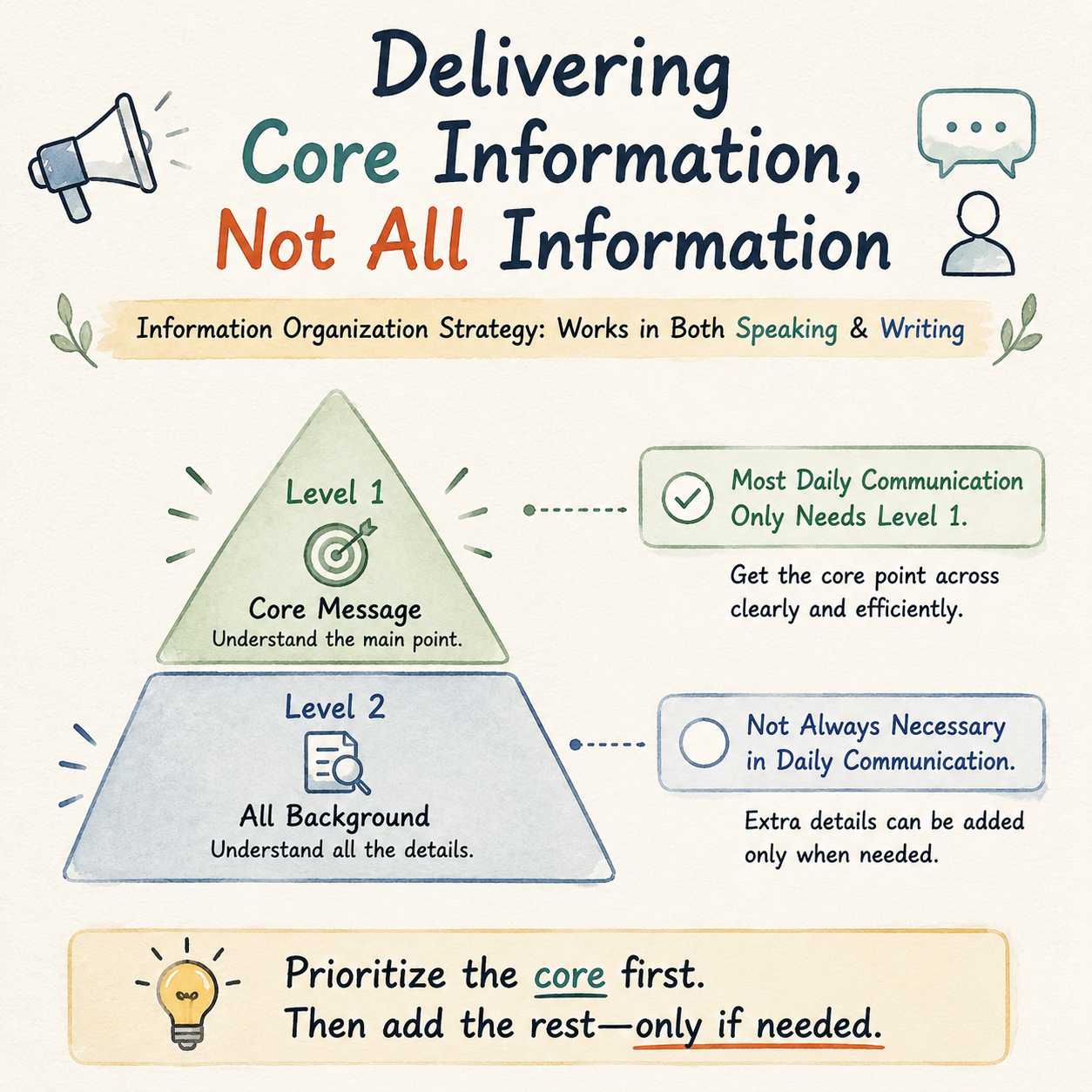
Delivering Core Information, Not All Information
Focus:
Developing an information organization strategy by learning to deliver core messages first instead of overwhelming listeners with unnecessary details.
This approach applies to both speaking and writing: prioritize essential information before adding supporting background.
Featured Example:
Bottom Line up Front Strategy (BLUF)
Focus:
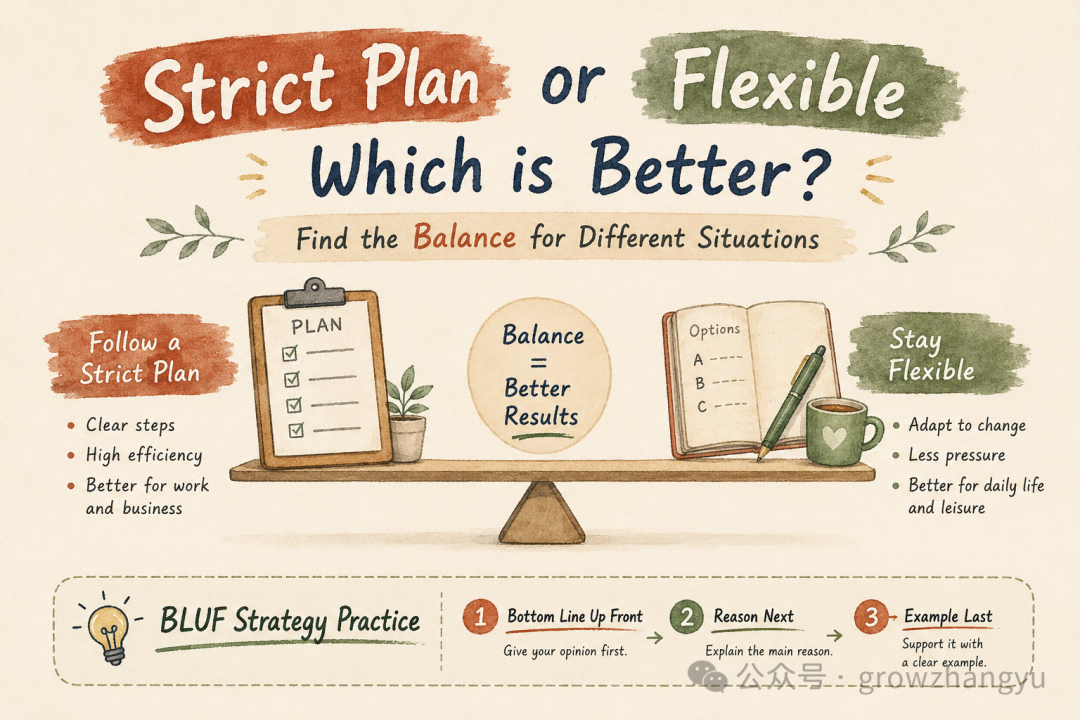
Training the brain to think in a structured way before speaking by following a simple communication framework:
My point is that… The main reason is that… For instance… So overall…
Rather than memorizing fixed expressions, this practice develops the habit of presenting ideas clearly, supporting them logically, and expanding naturally.
The same thinking framework can be applied across both speaking and writing tasks.
Featured Example:
Integrated Language Training
Focus:
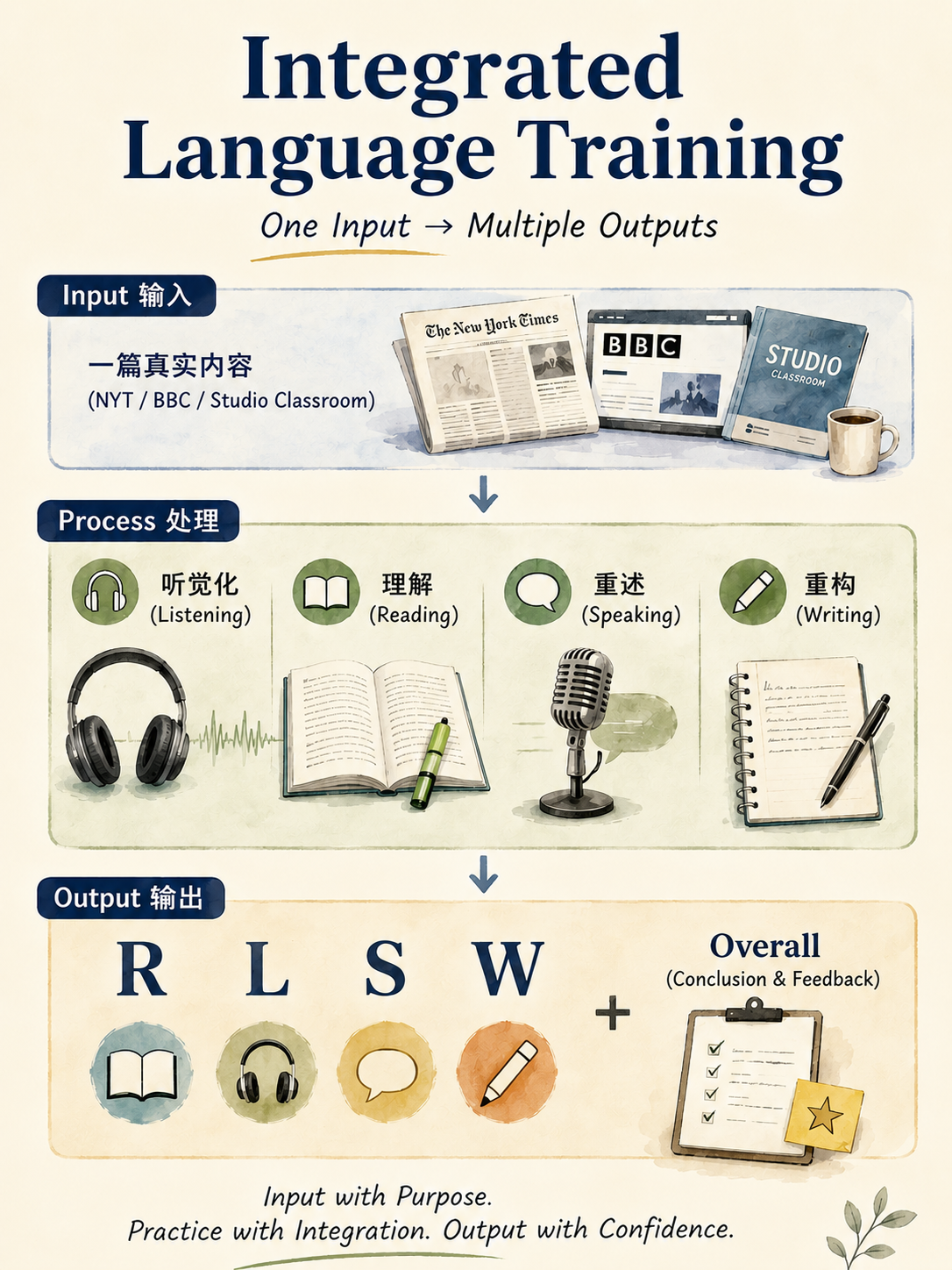
Maximizing the value of each learning resource by transforming a single piece of input into multiple forms of output (Speaking, Writing, Listening, and Reading).
This approach encourages active language use, deeper comprehension, and stronger connections between language learning and real-world communication.
Featured Example:
Building Speaking Momentum Through AI Conversation
Focus:
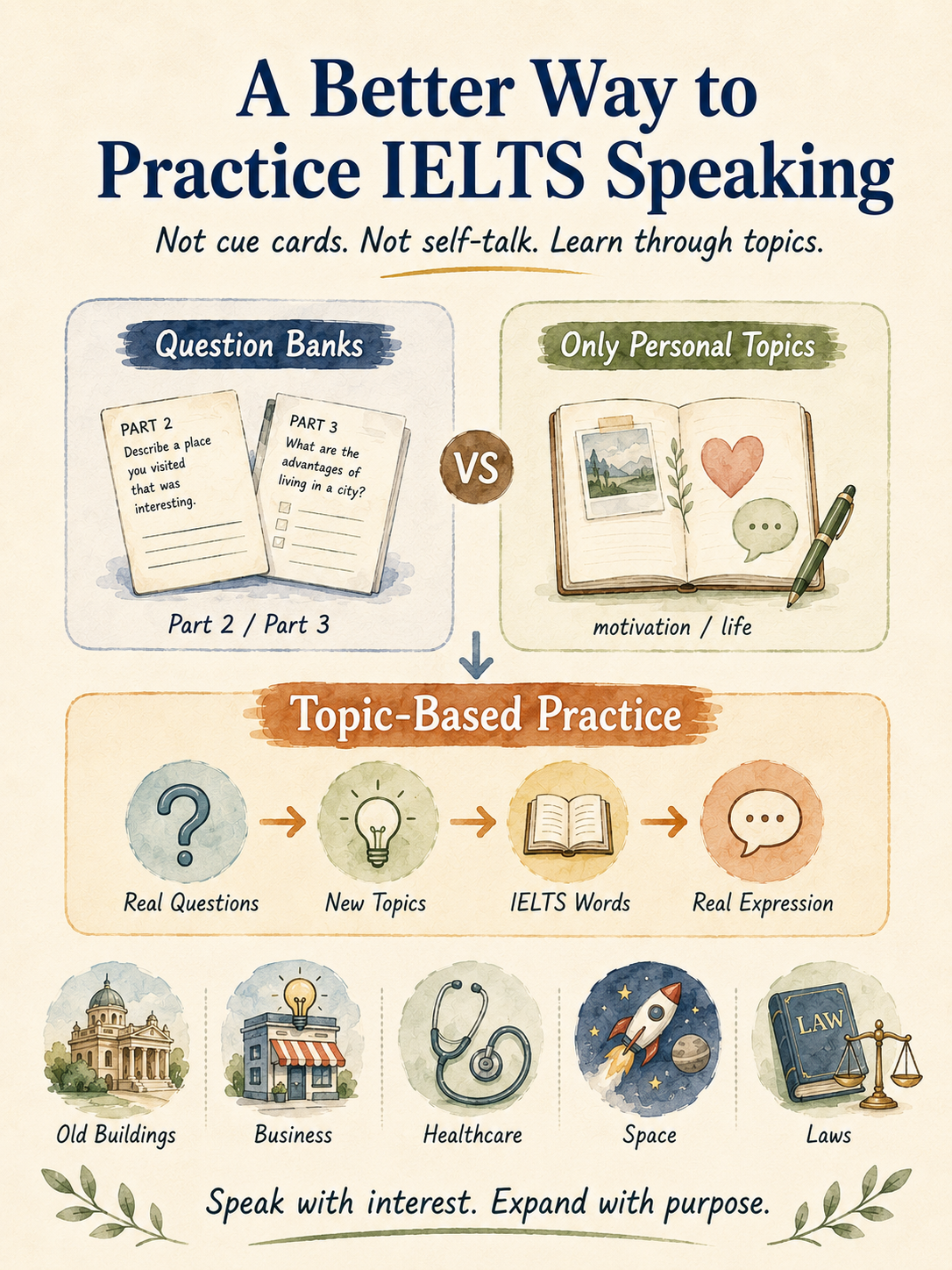
Many learners understand English well but struggle to begin speaking consistently. This example demonstrates how AI can be used as a low-pressure conversation partner to reduce resistance, create authentic interaction, and encourage spontaneous communication.
The goal is not only language improvement but also developing a sustainable habit of speaking English regularly.
Featured Example:
The Right Way to Practice English Speaking with AI Tools
Focus:
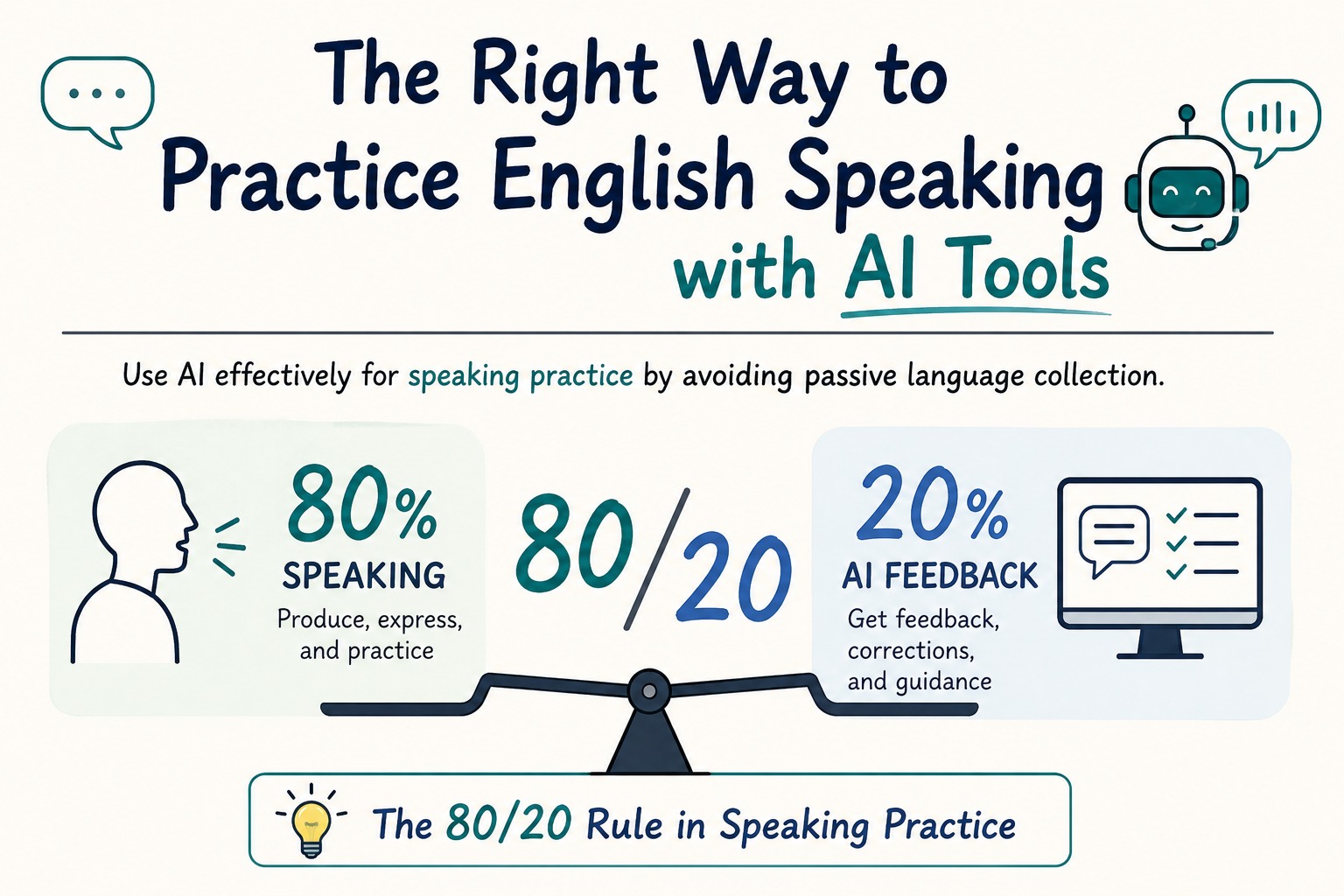
Using AI effectively for speaking practice by avoiding passive language collection.
The key strategy is an 80/20 balance: spend most of the time speaking, and let AI provide feedback and guidance.
Featured Example: