IELTS Speaking
Focus:
spoken fluency, structured responses, and natural expression under exam conditions.
5 General Ways to Generate Natural Answers
Focus:
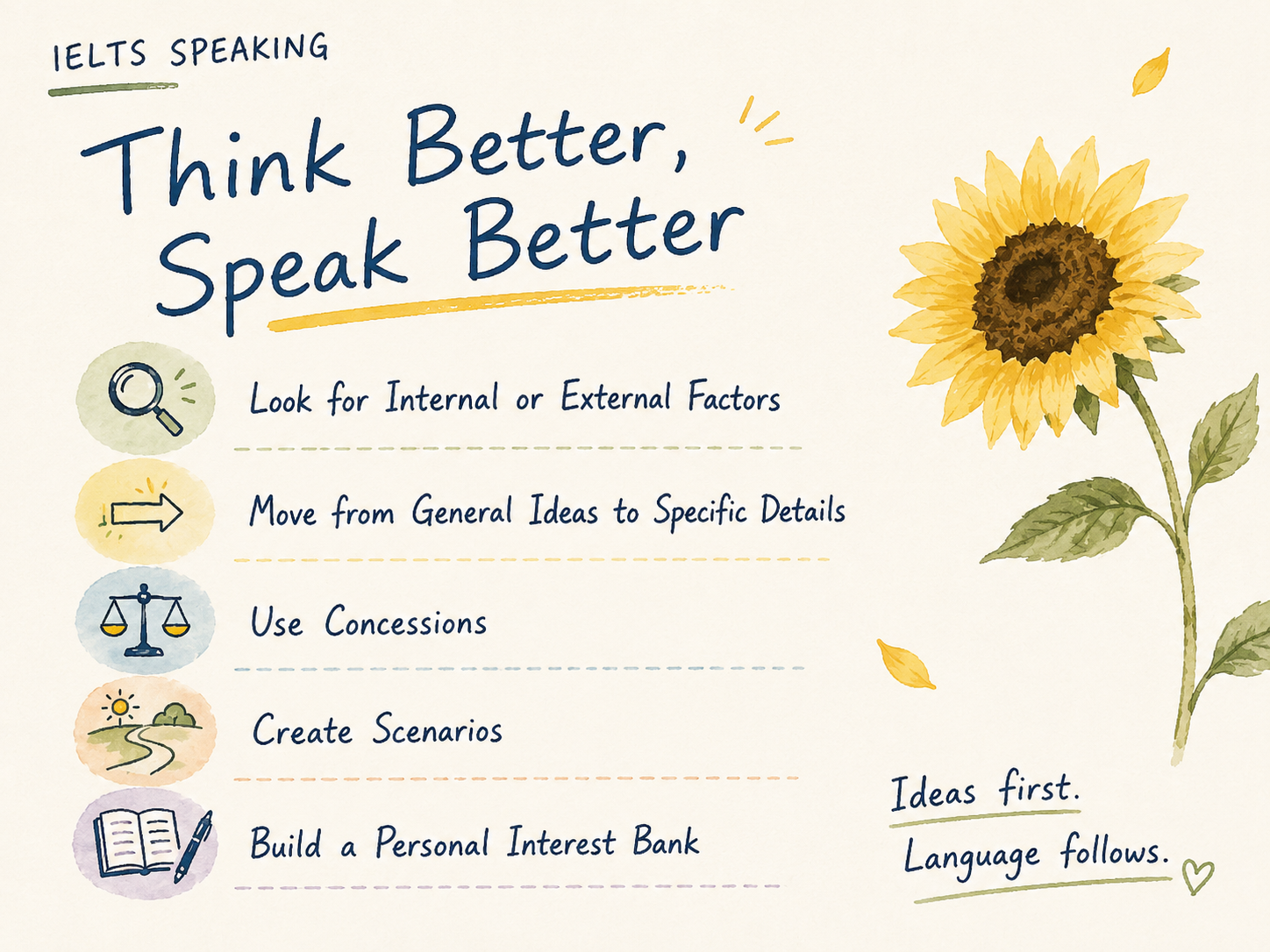
Developing authentic spoken responses through five thinking frameworks:
examining internal and external factors
moving from general ideas to specific details
using concessions
creating “it depends” scenarios
drawing on a personal interest bank.
Featured Example:
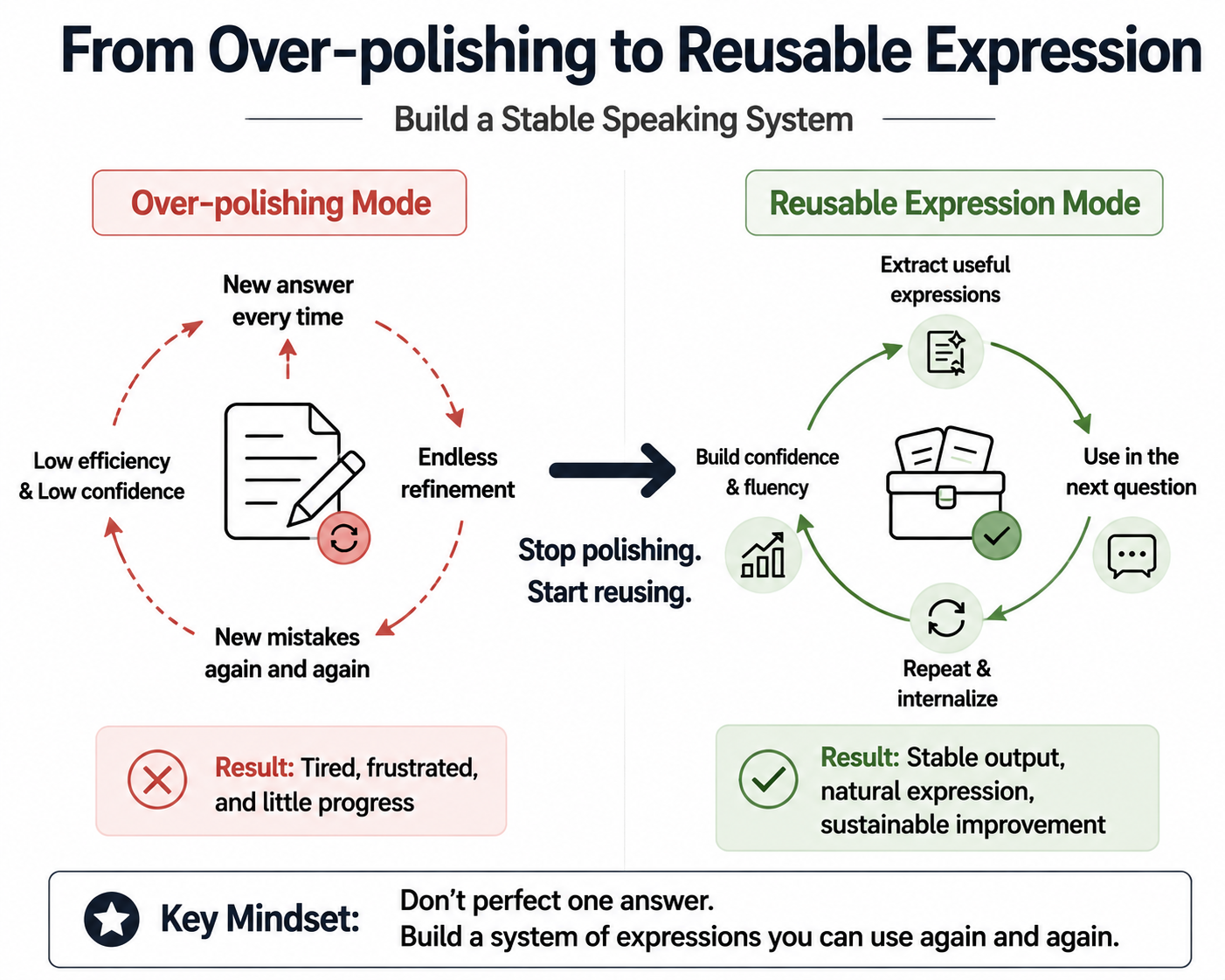
From Over-polishing to a Stable Speaking System
Focus:
Building a sustainable speaking practice system by learning when to stop polishing and start reusing.
A common challenge in speaking practice is the tendency to create a completely new answer every time and spend excessive time refining each response.
Although authentic expression is important, constant improvement requires more than producing new answers. It requires repetition, reuse, and consolidation.
Featured Example:
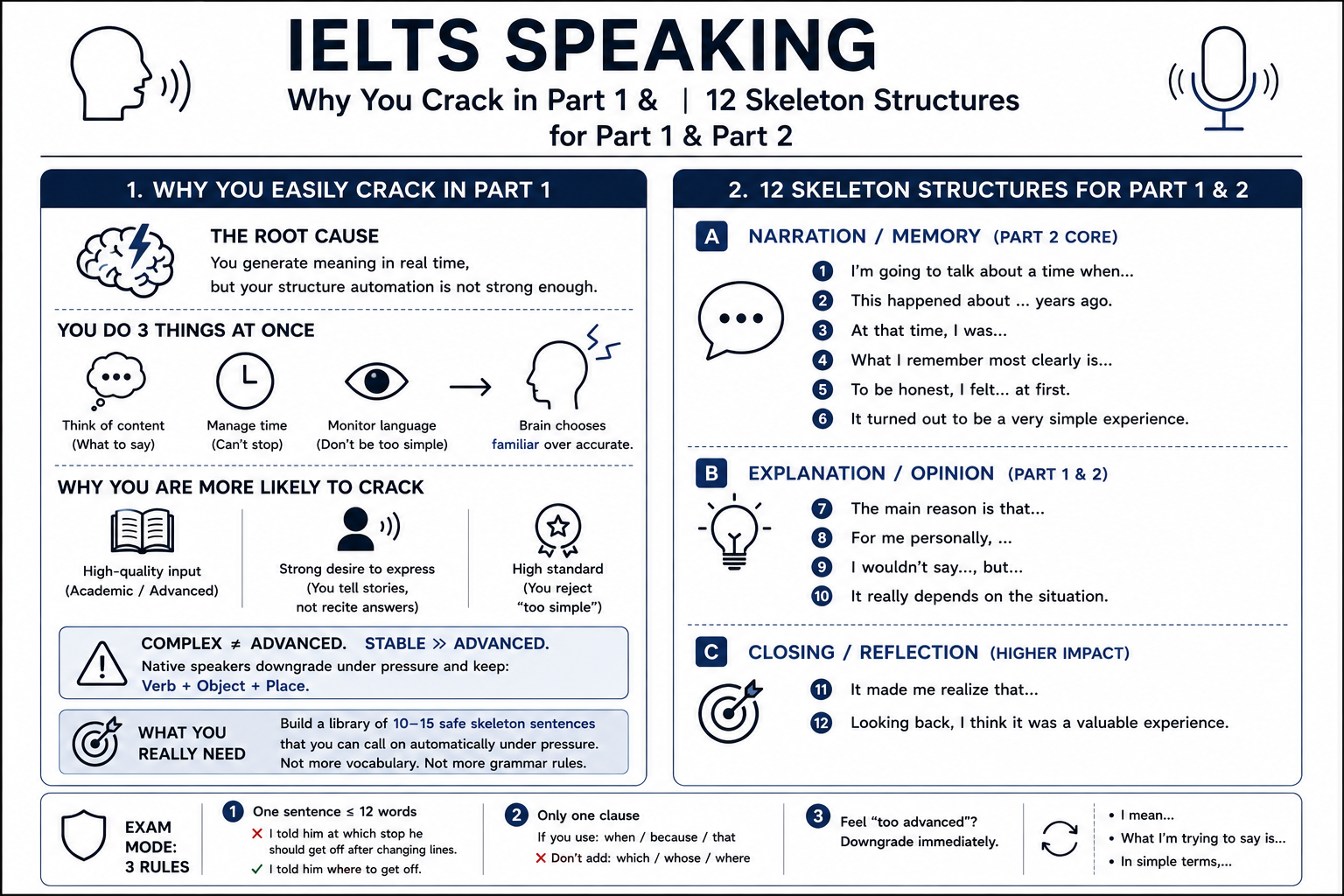
IELTS Speaking Skeleton Framework
Focus:
Understanding why spoken answers easily break down under pressure, and building a stable sentence skeleton for IELTS Speaking Part 1 and Part 2 through 12 safe sentence patterns and 3 exam-mode rules.
Featured Example:
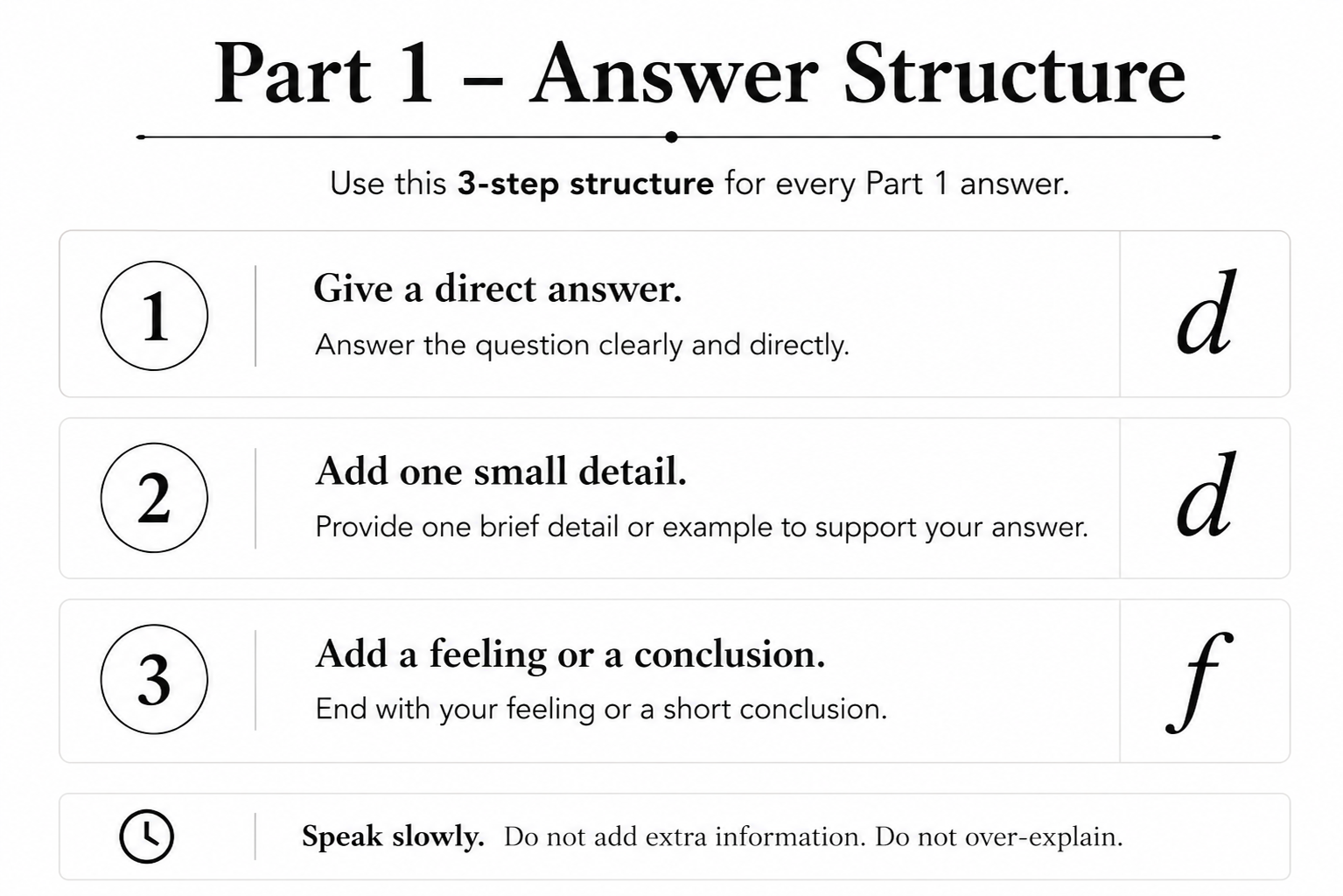
IELTS Speaking Strategy for Part 1
Focus:
Building controllable and comprehensive answer structures under time pressure
Featured Example:
Part 2 Deliberate Practice: Leaving Enough Time for Personal Feelings
Focus:
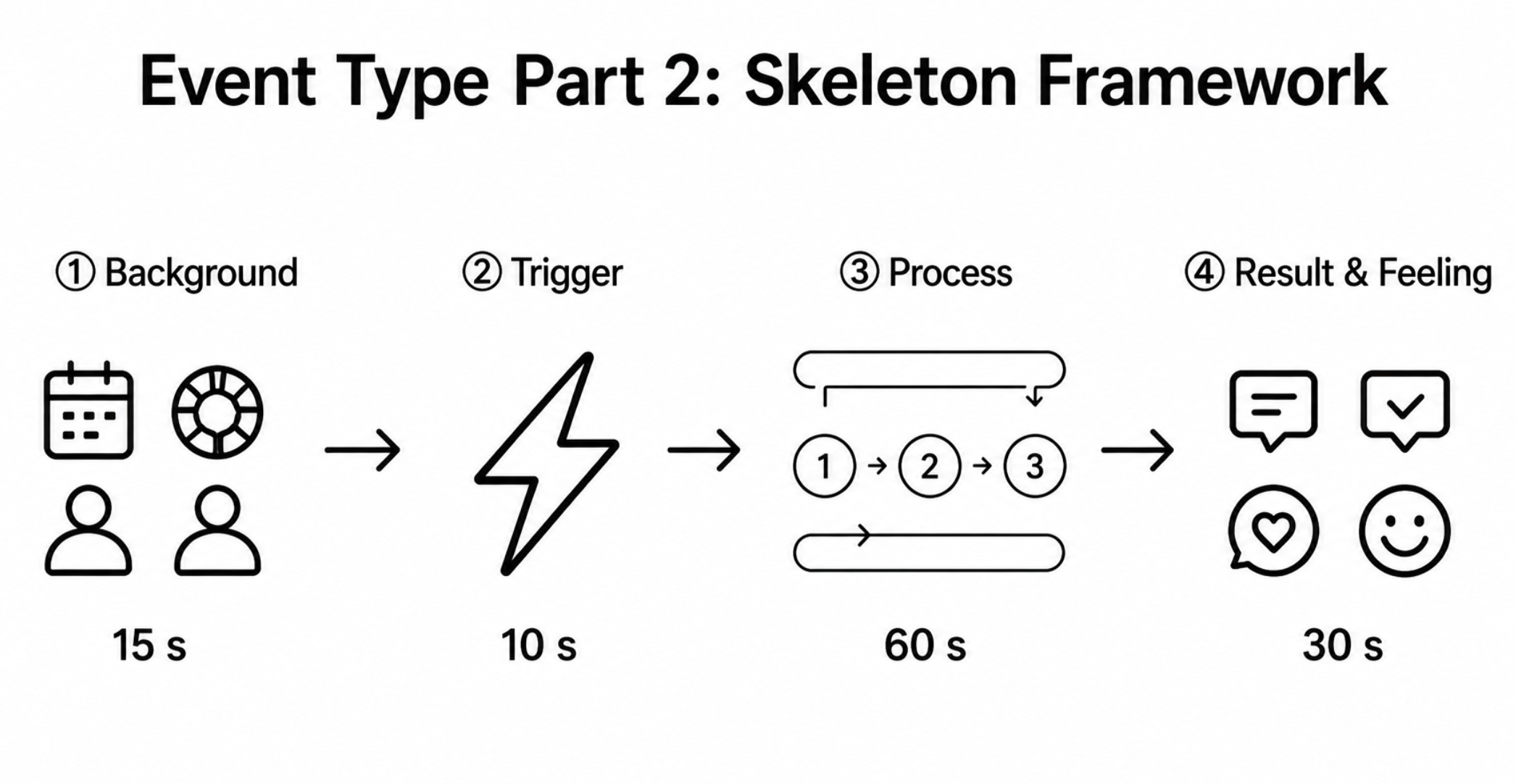
Analyzing the structure of IELTS Speaking Part 2 answers when telling a story. Identifying a common mistake: spending too much time describing factual details while leaving insufficient time for personal feelings and reflections.
This practice emphasizes the importance of reserving around 30 seconds for the reflection part, which provides more opportunities to demonstrate authentic communication, extend ideas naturally, and showcase higher-level speaking skills.
Featured Example:
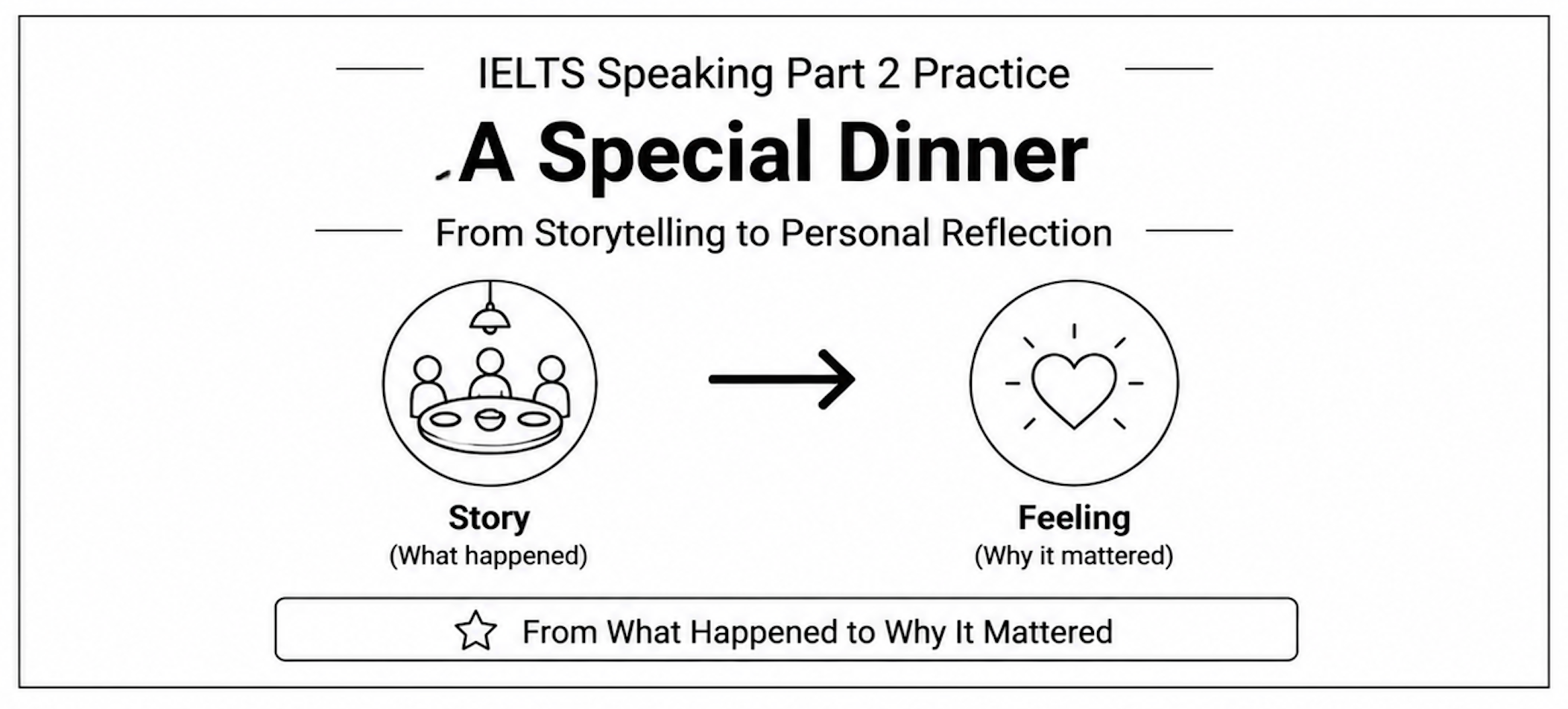
Example 1: Personal Feelings — A Special Dinner
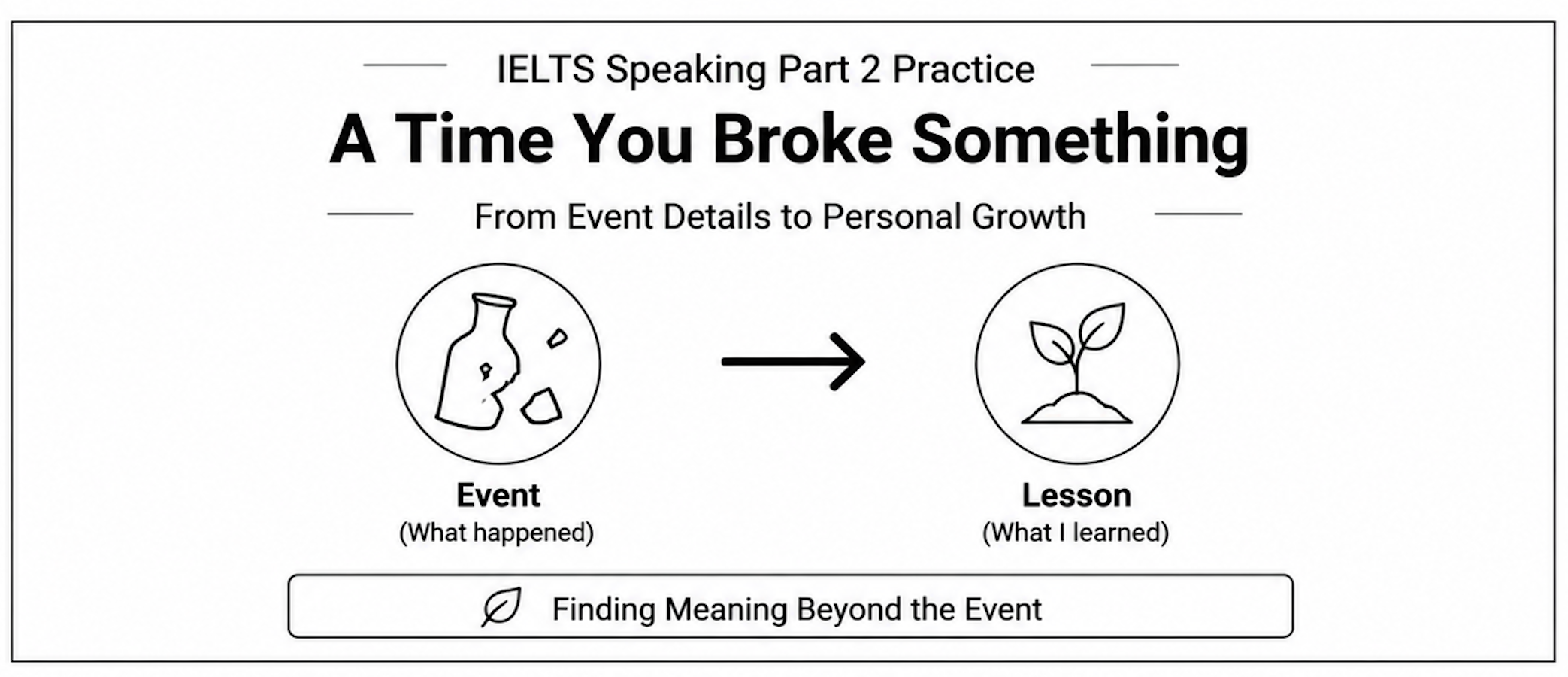
Part 2 Intensive Practice: Building a Logical Framework
Focus:
Understanding how to structure Part 2 answers logically and deliver detailed responses within two minutes
Featured Example: